
Depuis plusieurs semaines, je me pose une question simple et qui est sur toutes les lèvres : comment être cité par ChatGPT ?
Car aujourd’hui, l’enjeu ne se limite plus au SEO classique pour apparaître dans les résultats de Google. Il s’agit de comprendre comment une marque, une page web ou un site peut apparaître dans les réponses générées par une IA. En un mot, comment être cité par ChatGPT.
Pour y voir un peu plus clair, j’ai mené mes propres tests empiriques. Avec des amis situés sur différents continents : en Amérique, en Afrique, en Asie et en Europe, nous avons soumis à ChatGPT exactement les mêmes requêtes sur des thématiques liées à la santé, au sport, à des tâches quotidiennes et au commerce en ligne, en variant l’intention de recherche : informationnelle, commerciale et transactionnelle.
Les résultats que j’ai constatés sont décrits ci-après:
Les requêtes informationnelles (Know / Know Simple)
Exemple : Comment changer une roue de voiture ?
En recherchant cette requête dans la SERP de Google, on trouve des sites comme Midas, Ornikar ou Europcar parmi les premiers résultats. Pourtant, lorsque cette même question est posée à ChatGPT sans activer la recherche sur le Web, l’IA produit une réponse complète sans citer la moindre source, quel que soit le continent depuis lequel le prompt est envoyé.
Mais une fois la recherche Web activée, l’IA commence à proposer des liens vers Feu Vert, TotalEnergies, Allopneus, VroomVroom, et même une vidéo YouTube de France Casse.
Même constat pour une requête médicale : sans recherche sur le Web, aucune citation.
Ce comportement est logique. L’IA génère ses réponses à partir des connaissances acquises durant son entraînement sur un vaste corpus de données (c’est ce qu’on nous a dit depuis l’avènement des modèles génératifs). Elle ne consulte pas automatiquement Internet à chaque question. Elle construit une réponse en prédisant la suite la plus probable d’un texte en fonction du contexte.
Les requêtes transactionnelles / actionnelles (Do)
Exemple: J’ai un trek la semaine prochaine. Quelles chaussures sont idéales pour faire de la randonnée ?
Lorsqu’il s’agit de requêtes transactionnelles, le comportement change sensiblement.
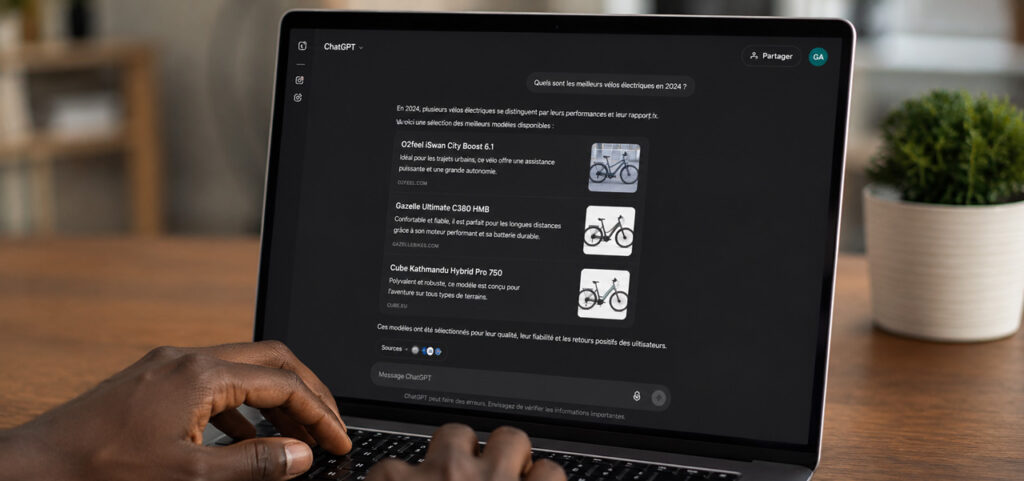
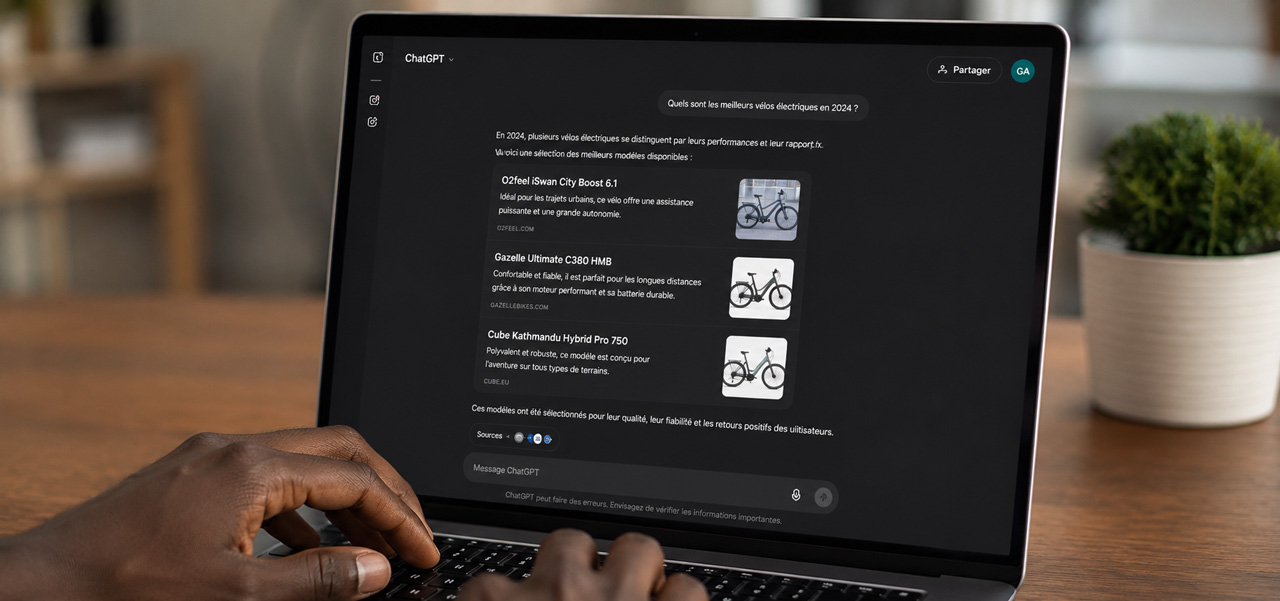
Pour des requêtes ayant une intention transactionnelle ou actionnelle, ChatGPT peut activer automatiquement la recherche sur le Web, même si l’utilisateur ne l’a pas demandée explicitement.
L’IA affiche alors des liens vers des boutiques en ligne, des fiches produits, des comparatifs, des images et, dans certains cas, des liens permettant directement de prendre rendez-vous ou d’effectuer un achat.
Autrement dit, la probabilité d’être cité dépend fortement de l’intention de recherche.
Finalement, qu’est-ce qu’on doit retenir ?
Tous les sites ne peuvent pas être cités par ChatGPT dans les mêmes conditions.
Lorsque la recherche sur le Web n’est pas activée et que la requête est purement informationnelle, ChatGPT ne cite généralement aucune source. À ce jour, OpenAI ne publie d’ailleurs aucune statistique indiquant la répartition entre les différents modes de fonctionnement de ChatGPT (réponse basée sur son entraînement, recherche sur le Web, recherche approfondie, etc.).
En revanche, lorsque ChatGPT décide d’effectuer une recherche sur le Web, plusieurs facteurs semblent influencer les sources retenues : l’autorité du domaine, la pertinence du contenu, la qualité des informations proposées et, surtout, l’intention de recherche.
ChatGPT lit-il uniquement les snippets ou explore-t-il réellement les pages ?
Une autre question s’est alors imposée : lorsque ChatGPT effectue une recherche sur le Web, se contente-t-il de lire les snippets présents dans la SERP ou est-il capable d’explorer réellement les pages ?
Pour répondre à cette question, j’ai réalisé plusieurs tests en modifiant le fichier robots.txt de différents sites et en observant le comportement de plusieurs systèmes d’IA.
Les résultats montrent qu’il faut distinguer les crawlers d’indexation classiques des systèmes de récupération de contenu utilisés par certaines IA.
Bloquer Googlebot dans le fichier robots.txt constitue souvent un signal de non-exploration. Cette directive est également respectée par de nombreux autres crawlers d’indexation ou d’entraînement, comme Bingbot et GPTBot, ce qui peut les conduire à ignorer la ressource.
En revanche, certains systèmes de recherche ou de récupération de contenu alimentant des LLM, comme ceux utilisés par Perplexity, Mistral ou Bing Copilot, peuvent, dans certains cas, récupérer la page via un moteur de rendu, exécuter le JavaScript et reconstruire le DOM final, même lorsque l’URL n’est pas explorée par les crawlers classiques.
Ce comportement dépend toutefois de leur pipeline de récupération, de leurs sources de données (index de recherche, cache, navigateur headless, etc.) et est susceptible d’évoluer au fil du temps.
Autrement dit, empêcher un crawler d’explorer une page ne signifie pas nécessairement qu’un assistant conversationnel sera incapable d’en exploiter le contenu.
Ces expérimentations montrent que les règles de visibilité évoluent rapidement.
Être bien positionné dans la SERP de Google reste important, mais cela ne garantit pas d’être cité par une IA. À l’inverse, certaines requêtes déclenchent automatiquement une recherche sur le Web et ouvrent la possibilité d’apparaître dans les réponses générées.
Le référencement entre progressivement dans une nouvelle phase. Il ne s’agit plus uniquement d’optimiser son positionnement dans les moteurs de recherche, mais aussi de comprendre comment les IA sélectionnent leurs sources, explorent les pages et déterminent les contenus suffisamment fiables pour être cités.
C’est probablement l’un des nouveaux défis du SEO à l’ère des modèles de langage.