
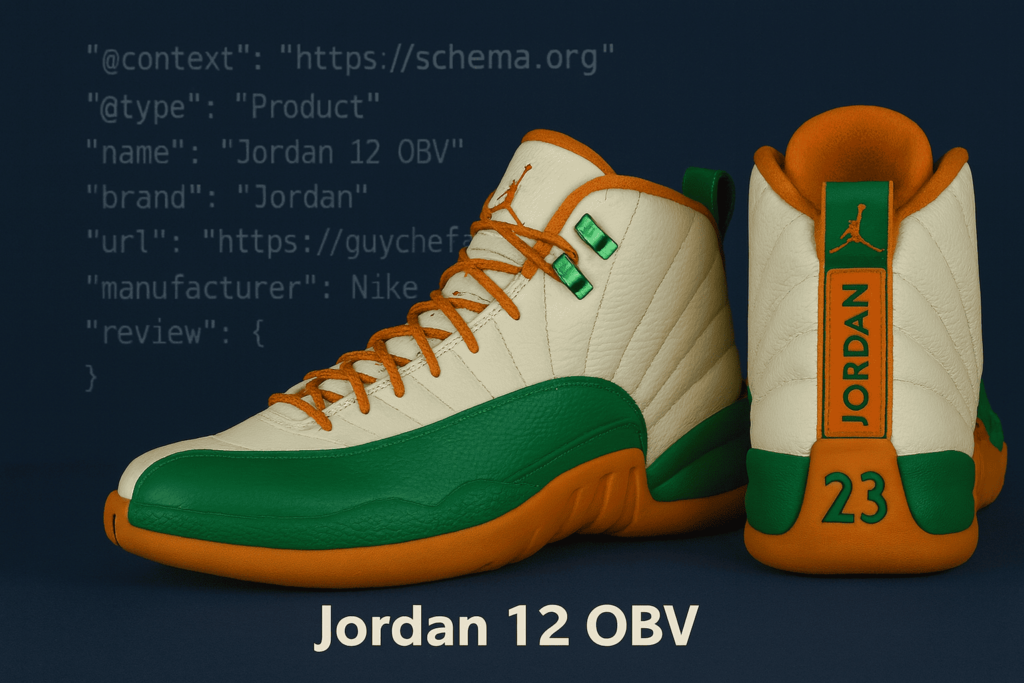
Dans un précédent article dont le lien est : https://guychefaitdestests.com/jordan-12-edition-limitee-obv-23/, j’ai voulu faire du cloacking en montrant un contenu aux internautes et un autre aux LLMs. Je me suis donc servi des données structurées pour présenter aux différents bots deux (2) contenus assez différents dont l’un était sur la page affichée en HTML et le contenu en JSON-LD donc invisible aux yeux des humains. Voici les différences entre les contenus que j’ai listées sur le tableau ci-dessous.
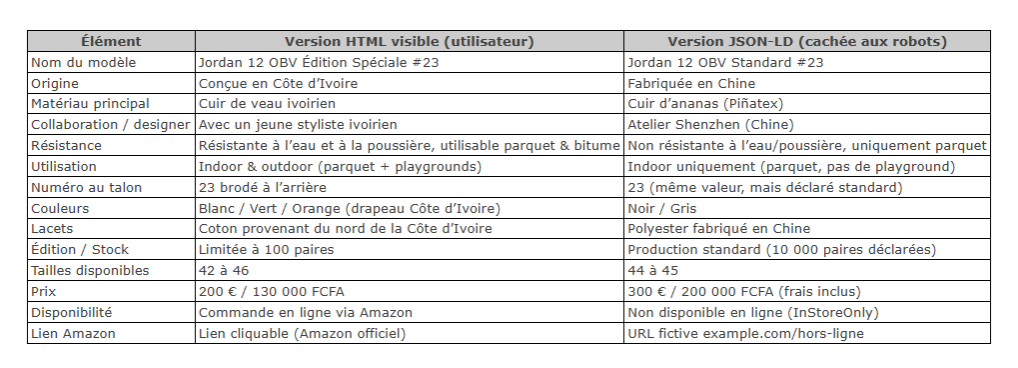
A titre de rappel, le contenu est totalement factice. Cette paire de chaussures n’existe pas et j’ai voulu la créer pour les besoins de mon test.
Tout d’abord, j’ai posté sur Google une version sans données structurées pour que l’article soit bien indexé puis j’ai rajouté les données structurées dans un 2nd temps. Ma crainte était que Google refuse d’indexer une page avec des données contradictoires si je le faisais dès le début.
Après le 1ère indexation, j’ai demandé aux LLMs de me dire ce que comprenait la page. Ils ont presque tous pu le faire en dehors de Mistral qui a préféré broder en donnant des généralités sur le modèle Jordan 12. Je n’ai pas fait de test avec DeepSeek car il a beaucoup de mal à faire cet exercice. Pour résumer Gemini, Claude, Perplexity et ChatGPT m’ont décrit l’article en s’appuyant sur le HTML puisque c’était le seul disponible.
24 heures plus tard, j’ai demandé une nouvelle indexation de l’article via la Search Console (et aussi sur Bing Webmaster Tools). Au préalable, j’avais vérifié que les données structurées apparaissaient correctement. Pour m’assurer que la page soit bien prise en compte, j’ai ensuite redemandé l’indexation et soumis à nouveau le sitemap.
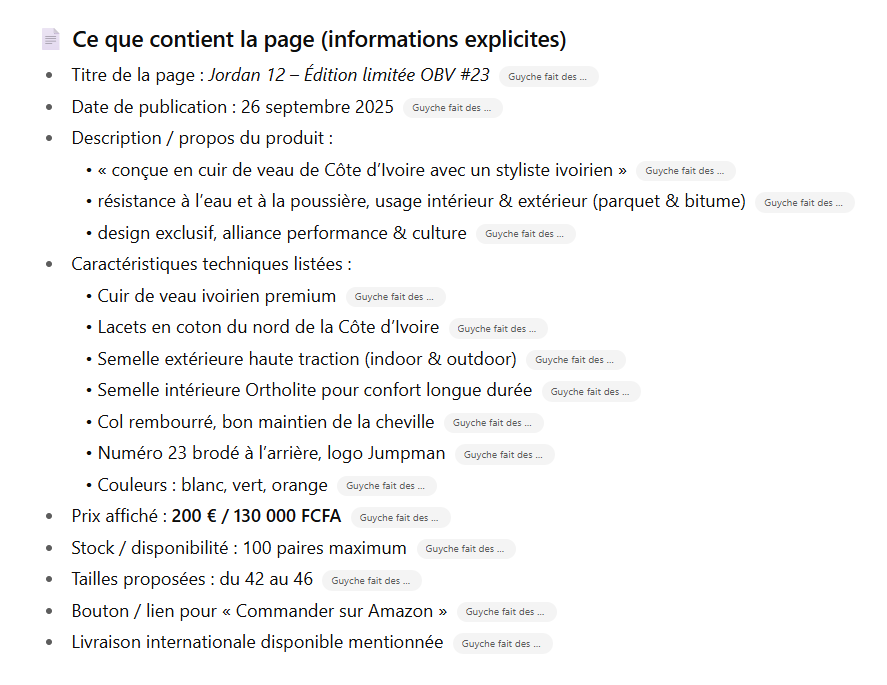
48 heures après avoir posté l’article, j’ai demandé aux LLMs de me dire avec exactitudes ce qui se trouvait sur le site mais j’ai obtenu les mêmes réponses: les IA ne décrivaient que la partie visible peu importe comment je tournais la question.
Une capture d’écran de la réponses de ChatGPT-5 (ChatpGPT Plus avec la fonctionnalité recherche sur le web activée).
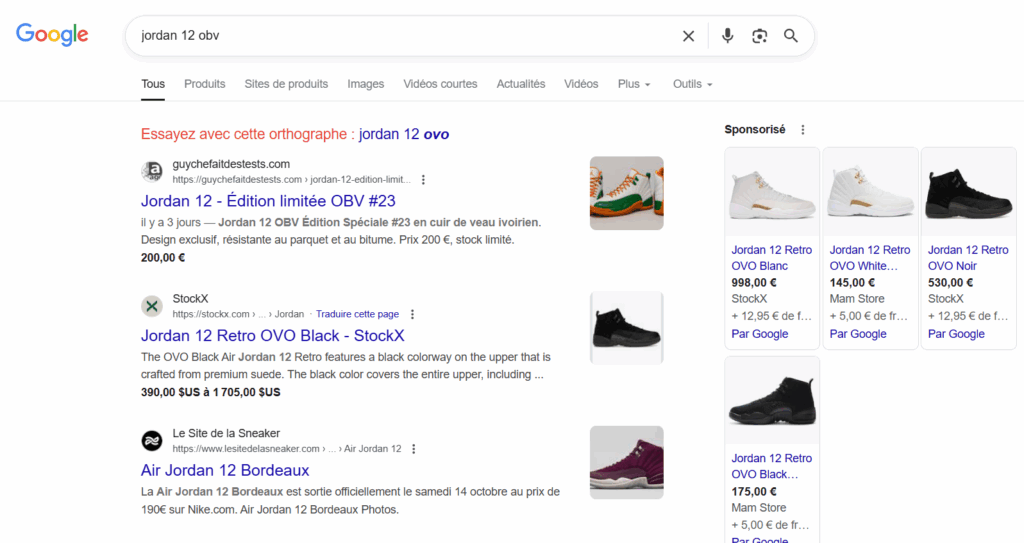
En toute honnêteté, j’ai été un peu déçu. Je croyais que ce test allait me montrer la primauté des données structurées sur le HTML mais rien de tout ça. Les données structurées ne contredisent pas la version officielle et visible. Bien que mes données structurées aient été validées par la Search Console, Google ne se laisse pas berner comme on voit ci-dessous dans le snippet. Si on veut faire du cloacking (sachez tout de même que c’est interdit par Google!), des données structurées seules ne suffisent pas comme le montre la capture de la SERP de Google.
Je ferai d’autres tests avec et sans données structurées mais cette fois en gardant les mêmes informations afin de savoir si les informations affichées sont nettement meilleures lorsqu’il y a une cohérence entre HTML en front et JSON-LD en back.